What It Actually Costs to Formulate a Real Functional Coffee: What's Behind Earth Co's Price
The cost to formulate a real functional coffee reflects the expense of clinically effective ingredient doses, third-party testing, and premium sourcing standards. Unlike conventional coffee or supplement-dusted blends, authentic functional coffee requires significant investment in bioactive compounds that actually work. This transparency matters because the functional beverage market is flooded with products using ineffective "fairy dust" amounts of trendy ingredients.
Understanding What Makes Functional Coffee Formulation Different
Functional coffee formulation cost begins with a fundamental question: are you adding ingredients for marketing or for measurable health benefits? The difference between these approaches explains why prices vary so dramatically across the market. A product containing 50mg of ashwagandha costs pennies to produce but delivers zero adaptogenic benefit. A product containing the clinically studied 300mg dose costs significantly more but actually supports your stress response.
Research confirms that ingredient dosing matters enormously for efficacy. According to a 2012 study published in the Indian Journal of Psychological Medicine, ashwagandha demonstrated significant cortisol-reducing effects at doses of 300mg of standardized extract taken twice daily. Lower doses simply don't produce the same HPA axis modulation or stress-relieving benefits that make adaptogens valuable in the first place.
This dosing principle applies across every functional ingredient category. Whether we're discussing beta-glucans from medicinal mushrooms, hydrolyzed collagen peptides for skin elasticity, or prebiotic fibers that feed your gut microbiome, clinical effectiveness requires clinical doses. The cost to formulate a real functional coffee reflects this non-negotiable reality.
The Real Cost of Premium Functional Ingredients
Let's break down what quality functional ingredients actually cost at wholesale. Organic lion's mane mushroom extract standardized for beta-glucans runs approximately $80-120 per kilogram. Hydrolyzed marine collagen with verified molecular weight for optimal absorption costs $40-60 per kilogram. KSM-66 ashwagandha, the most clinically studied form, commands $150-200 per kilogram.
These figures explain why many brands resort to proprietary blends that obscure actual ingredient amounts. When a company lists "adaptogen blend 500mg" containing five different ingredients, simple math reveals each component appears in trivially small quantities. This approach reduces formulation costs dramatically while allowing impressive-sounding label claims.
Beyond raw ingredient costs, functional coffee formulation requires extensive stability testing. Bioactive compounds like postbiotics and certain amino acids can degrade when exposed to heat, light, or moisture. Ensuring these ingredients remain effective throughout the product's shelf life demands specialized packaging, careful processing temperatures, and ongoing quality verification. These considerations add meaningful cost that disappears from budget formulations.
Evidence suggests that ingredient sourcing geography significantly impacts both cost and quality. According to Healthline's comprehensive review of ashwagandha, the plant's withanolide content varies based on growing conditions, harvest timing, and extraction methods. Brands committed to consistent potency must pay premium prices for standardized extracts rather than accepting variable raw materials.
Third-Party Testing and Quality Assurance Costs
Legitimate functional coffee brands invest heavily in third-party testing to verify ingredient identity, potency, and purity. A single Certificate of Analysis from an accredited laboratory costs $200-500 per ingredient per batch. For a product containing five functional ingredients, testing costs alone can exceed $2,000 before a single bag ships.
This testing verifies that what's on the label matches what's in the product. It screens for heavy metals, pesticide residues, and microbial contamination. It confirms that your lion's mane contains actual beta-glucans at stated levels, not just ground-up mycelium grown on grain. These distinctions matter for immunomodulation and the neuroplasticity benefits that draw consumers to functional mushrooms.
Clinical studies show why cutting corners on quality assurance creates real problems. A 2020 analysis published in the Journal of Dietary Supplements found significant discrepancies between labeled and actual ingredient amounts in many supplements. Some products contained less than 50% of claimed active compounds. Rigorous testing prevents these issues but requires ongoing investment that budget brands avoid.
Earth Co Organics maintains relationships with certified testing facilities and requires documentation at every supply chain step. You can explore our complete ingredients page to see exactly what goes into each formulation and why we selected specific forms of each functional compound.
Why Cheap Functional Coffee Often Isn't Functional At All
The functional beverage market has exploded with products making impressive claims at suspiciously low prices. Understanding functional coffee formulation cost helps you recognize when something seems too good to be true. If a product contains ten functional ingredients at half the price of competitors, those ingredients almost certainly appear in sub-therapeutic amounts.
Nutrition experts agree that this "fairy dusting" practice undermines consumer trust in the entire functional food category. A sprinkle of collagen won't support fibroblast activity in your dermis. A trace of prebiotic fiber won't generate meaningful butyrate production in your colon. These ingredients require specific quantities to influence the biological pathways that create real benefits.
Consider the economics: if a bag of functional coffee costs $15 and claims to contain collagen, adaptogens, and medicinal mushrooms at effective doses, the math simply doesn't work. Quality organic coffee alone costs $8-12 per pound wholesale. Adding several grams of premium functional ingredients per serving would push raw material costs beyond the retail price. Something has to give, and it's usually ingredient quality or quantity.
This reality shapes our pricing philosophy at Earth Co. We'd rather offer fewer products formulated correctly than expand our line with compromised formulations. Every product in our shop reflects this commitment to clinical-level dosing and transparent ingredient sourcing.
The Hidden Costs Behind Ethical Formulation
Functional coffee formulation cost extends beyond ingredients and testing into ethical sourcing considerations. Organic certification for coffee requires annual audits, documentation systems, and premium payments to farmers practicing sustainable agriculture. Fair trade commitments add another layer of cost that supports farming communities rather than extracting maximum profit.
These choices reflect values that health-conscious consumers increasingly prioritize. The same person seeking adaptogens for cortisol management often cares about environmental impact and worker welfare. Meeting these expectations requires investment that commodity-focused competitors avoid.
Manufacturing functional coffee also demands specialized facilities. Unlike standard coffee roasting, incorporating heat-sensitive compounds like certain probiotics or delicate botanical extracts requires modified processes. Temperature-controlled blending, oxygen-free packaging, and humidity management all add equipment and operational costs that standard coffee production doesn't require.
Small-batch production, which maintains freshness and quality control, sacrifices the economies of scale that massive brands enjoy. A company producing millions of units can spread fixed costs across enormous volume. Craft-scale functional coffee brands absorb these costs across smaller production runs, necessarily increasing per-unit pricing.
Making Functional Coffee Worth Every Dollar
When you understand the true cost to formulate a real functional coffee, the value proposition becomes clearer. Rather than buying separate supplements for stress support, gut health, or cognitive enhancement, functional coffee consolidates benefits into a ritual you already enjoy. The combined cost often compares favorably to purchasing individual supplements while adding the genuine pleasure of exceptional coffee.
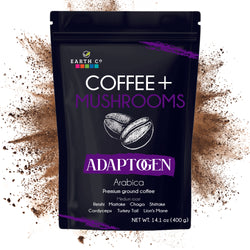
Adaptogen, a functional coffee that combines medicinal mushrooms and adaptogens for stress and focus, exemplifies this philosophy. Each serving delivers clinically relevant doses of lion's mane for neuroplasticity support and ashwagandha for HPA axis balance. The formulation cost reflects real ingredients at real doses, not marketing claims backed by trace amounts.
Your morning cup becomes an investment in how you feel throughout the day. That investment deserves transparency about what you're actually consuming and why it costs what it does.
Explore Earth Co's Functional Coffee Collection
Why is functional coffee more expensive than regular coffee?
Functional coffee costs more because it contains clinically effective doses of premium ingredients like adaptogens, collagen, or prebiotics. These bioactive compounds require specialized sourcing, testing, and formulation expertise that standard coffee production doesn't demand.
How do I know if a functional coffee has real ingredients?
Look for brands that disclose exact ingredient amounts rather than hiding behind proprietary blends. Third-party testing certifications and transparent sourcing information are also indicators of legitimate functional coffee formulations.
Is functional coffee worth the extra cost?
When formulated with clinically relevant doses of quality ingredients, functional coffee can replace multiple supplements while providing the ritual you already enjoy. The cost-per-benefit often compares favorably to buying separate supplements individually.