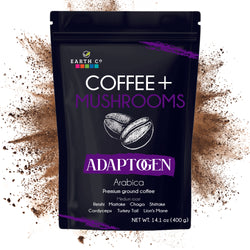
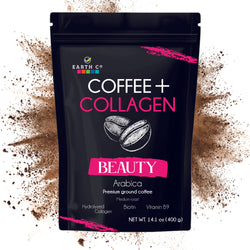
Collagen coffee has become one of the most searched terms in the US wellness market — and with that search volume has come an enormous amount of conflicting information. Some sources promise visible skin transformation in days. Others dismiss collagen coffee entirely as a marketing invention with no biological basis. The truth sits between those two positions, and it is considerably more interesting than either extreme. Here is a precise, week-by-week account of what actually happens to your skin, hair, and nails when you drink collagen coffee every single day for 30 days — based on the biology of collagen synthesis and what the research on hydrolyzed collagen supplementation actually shows.
Before the First Cup: Understanding What You Are Working With
Not all collagen in coffee is created equal. The form of collagen determines almost everything about whether a collagen coffee product can deliver meaningful results — and most consumers have never been told what to look for.
Collagen is a structural protein composed of long chains of amino acids — primarily glycine, proline, and hydroxyproline — that form the fibrous scaffolding of your skin, hair follicle structure, nail bed, and connective tissue. In its native form, collagen molecules are too large to be absorbed through the intestinal wall. Your digestive system cannot transport intact collagen into the bloodstream regardless of how much you consume.
Hydrolyzed collagen — also called collagen peptides — solves this problem through enzymatic processing that breaks the long collagen chains into short peptide fragments small enough to be absorbed intact through the gut wall and transported into the bloodstream. Once in circulation, these peptides have two functions: they provide the specific amino acids your fibroblasts need to synthesize new collagen, and they act as signaling molecules that trigger fibroblast activity — essentially telling your body that collagen breakdown has occurred and that new collagen synthesis is required.
Earth Co's BEAUTY Coffee uses hydrolyzed collagen type I and type III — the two types most directly relevant to skin elasticity, hair structure, and nail integrity. Type I collagen is the most abundant collagen in human skin and the primary structural component of nail beds. Type III collagen works alongside type I in maintaining skin elasticity and is particularly associated with the plumpness and bounce of healthy skin. Together they represent the most evidence-supported collagen combination for cosmetic outcomes.
Week One: Days 1 Through 7
The first week of daily collagen coffee is biologically active in ways that are not yet visible on the surface. Understanding what is happening internally during week one is important because it explains why you should not expect visible results yet — and why stopping at day seven because you see nothing is one of the most common and consequential mistakes in collagen supplementation.
When hydrolyzed collagen peptides enter your bloodstream from the gut, they are distributed to tissues throughout the body based on blood flow and receptor affinity. The peptides that reach skin fibroblasts — the cells responsible for synthesizing collagen and elastin in the dermis — trigger a signaling cascade that upregulates collagen synthesis genes. Your fibroblasts receive the signal that collagen availability is high and begin producing new collagen proteins.
This process takes time. Collagen fibers are assembled gradually in the extracellular matrix of the dermis — the layer of skin beneath the surface epidermis that determines skin thickness, firmness, and resilience. New collagen fibers being laid down in week one will not produce surface-visible changes until they accumulate in sufficient density to affect the mechanical properties of the skin.
What some people notice in week one — though not all — is improved skin hydration. Collagen peptides have been shown to increase hyaluronic acid production in skin tissue, and hyaluronic acid is the molecule most directly responsible for skin moisture retention. If your skin has been significantly dehydrated, this hydration effect can be noticeable within the first seven days as a subtle improvement in skin texture and a reduction in the feeling of tightness or dryness.
Week Two: Days 8 Through 14
By the second week of daily BEAUTY Coffee consumption, the collagen synthesis signaling initiated in week one is producing measurable new collagen fiber deposition in the dermis. The fibers are still accumulating — not yet at levels that produce dramatic visible change — but the biological foundation of the visible improvements that follow is being actively constructed.
The most commonly reported week two experience for consistent collagen coffee drinkers is an improvement in skin texture at the surface level. The epidermis — the outermost skin layer — is supported from below by the dermis, and as collagen fiber density begins to increase in the dermis, the surface texture of the skin begins to reflect that structural improvement. Skin may feel slightly smoother to the touch. The appearance of fine surface lines — particularly those associated with dehydration rather than deep structural collagen loss — often visibly reduces during this period.
For hair, week two is when the amino acid supply from daily hydrolyzed collagen begins meaningfully supporting the keratin synthesis in hair follicles. Hair is primarily composed of keratin — a protein whose synthesis requires the same amino acids that collagen peptides provide, particularly glycine and proline. Hair follicles are among the most metabolically active tissues in the body and respond relatively quickly to improved amino acid availability. Most people cannot detect structural improvements in hair growth at week two — the hair growth cycle operates on a monthly timeline — but the biological support for improved hair quality is established by this point.
Nail growth is similarly supported by the amino acid availability that hydrolyzed collagen provides. Nails grow at approximately 3 millimeters per month from the nail matrix — the tissue at the base of the nail beneath the cuticle. New nail produced during week two will incorporate the structural proteins supported by collagen supplementation, but that nail will not be visible at the surface for several more weeks as it grows outward.
Week Three: Days 15 Through 21
Week three is when the majority of consistent collagen coffee drinkers describe their first clearly visible change — and it is typically more significant than they expected given the subtlety of weeks one and two.
The primary visible change in week three is skin firmness and elasticity. As collagen fiber density in the dermis continues to increase, the mechanical properties of the skin measurably improve. Skin rebounds more quickly when pressed. The slight sagging or looseness associated with collagen-depleted skin — particularly around the jaw, under the eyes, and on the upper arms — begins to noticeably reduce. This is not a dramatic transformation, but it is clearly visible to the person experiencing it and often noticed by others.
Research published in the Journal of Cosmetic Dermatology examining hydrolyzed collagen supplementation at doses consistent with BEAUTY Coffee's formulation found statistically significant improvements in skin elasticity at eight weeks of supplementation. Week three represents the midpoint of that timeline — the period when the improvement trajectory is clearly established even if the full effect has not yet accumulated.
Fine lines — particularly those caused by reduced skin volume and elasticity rather than repetitive muscle movement — begin to visibly soften during week three. The skin appears more plump and hydrated from below as the combination of increased collagen fiber density and improved hyaluronic acid production fills the structural space that collagen loss had vacated.
For nails, week three is when the first improvements in nail strength become noticeable. Nails that were prone to splitting, peeling, or breaking may begin showing improved structural integrity as the nail grown during supplementation — supported by improved keratin synthesis — reaches sufficient length to be visible and testable. This is typically the nail tip and free edge area, which represents approximately three weeks of nail growth.
Week Four: Days 22 Through 30
The fourth week of daily BEAUTY Coffee represents the consolidation of everything that has been building since day one — and for most consistent drinkers, it is the period of most clearly visible and most gratifying results.
Skin at the end of 30 days of daily hydrolyzed collagen type I and III supplementation shows measurable improvements across multiple parameters that have been documented in peer-reviewed research: elasticity, hydration, surface texture, and the visible depth of fine lines. The cumulative effect of 30 days of daily collagen synthesis signaling, amino acid availability for fibroblast activity, and hyaluronic acid production support is visible in the mirror in a way that the subtle changes of weeks one through three were not.
The most consistent observation from 30-day collagen supplementation research is the improvement in skin elasticity — the ability of skin to stretch and return to its resting position. This improvement reflects the increased collagen fiber density in the dermis and is the biological basis of the plumper, more youthful appearance that consistent collagen supplementation produces. Skin that was visibly thin or crepey at the start of the 30 days typically shows noticeable improvement in thickness and resilience by the end of week four.
Hair quality improvements at 30 days are typically visible in the shaft of hair that has grown since supplementation began — approximately 10 to 12 millimeters of new growth, corresponding to the upper portion of each hair shaft. This new growth, produced with improved amino acid availability, tends to show improved shine, reduced brittleness, and improved texture compared to older growth further down the shaft. The full benefit to overall hair appearance accumulates over several months as more of each hair shaft is replaced by growth supported by supplementation.
Nails at 30 days show the most dramatic proportional improvement of any tissue — because nails grow relatively quickly and the new nail grown during supplementation represents a significant fraction of total nail length. Nails that began the 30 days as brittle or prone to peeling typically show markedly improved strength and structural integrity in the new growth, with a visibly smoother and more consistent surface.
What Happens After 30 Days
The 30-day mark is not the peak of collagen coffee results — it is the beginning of the period of maximum sustained benefit. Collagen synthesis responds to consistent daily signaling. The improvements documented at 30 days continue to accumulate with ongoing daily supplementation, with research showing that skin elasticity and hydration improvements continue to increase significantly through 8 and 12 weeks of daily use.
Stopping supplementation after 30 days allows the signaling to cease and collagen synthesis to return gradually to its baseline rate. The improvements made during supplementation do not disappear overnight — the new collagen fibers deposited during the 30 days remain in the dermis for months — but without continued supplementation the progressive improvement stalls and eventually reverses as normal collagen turnover continues without the enhanced synthesis that supplementation provides.
The most significant visible results from BEAUTY Coffee come from drinking it consistently every morning as a permanent replacement for your regular coffee — not as a 30-day course with a defined endpoint.