Sustainable wellness is the practice of building health habits that you can maintain consistently for years, not just weeks. Unlike complex routines that demand hours of daily effort, sustainable wellness focuses on small, repeatable actions anchored to behaviors you already do. This approach recognizes that the best wellness strategy is the one you will actually follow.
The Science Behind Sustainable Wellness Habits
Why do some health habits stick while others fade after January? The answer lies in how our brains form automatic behaviors. Habit formation is the neurological process by which repeated actions become automatic through consistent practice in stable contexts.
A 2010 study published in the European Journal of Social Psychology (Lally et al., PMID 20697840) from University College London tracked 96 participants over 12 weeks as they adopted new daily health behaviors. The researchers found it took an average of 66 days for a new behavior to become automatic — with a range of 18 to 254 days depending on the complexity of the habit. Crucially, simpler actions became automatic significantly faster than complex ones. Exercise behaviors required roughly 1.5 times longer to reach peak automaticity than simple behaviors like drinking water.
This finding has profound implications for sustainable wellness. Complex morning routines involving meditation, journaling, cold showers, supplements, and exercise demand significant cognitive resources. Each decision point creates friction. When stress increases or schedules shift, these elaborate protocols collapse under their own weight.
Simple habits anchored to existing behaviors — like adding functional ingredients to your morning coffee — require minimal decision-making. They leverage habit stacking, attaching a new behavior to an established one. Your brain already has the neural pathway for making coffee; adding one step barely registers as effort.
Why Complex Wellness Routines Fail Most People
The wellness industry often promotes elaborate protocols that sound impressive but prove unsustainable for real life. Consider the typical "optimal morning routine" promoted on social media: wake at 5 AM, meditate for 20 minutes, journal, exercise for 45 minutes, cold shower, complex breakfast, review goals. That is two hours before you have started your actual day.
Behavioral science research has examined how cognitive demands affect subsequent decision-making and self-regulation. A review published in Frontiers in Psychology (PMC6598008) explored self-control and decision fatigue, noting that while the strength of these effects is debated in the literature, demanding routines that require ongoing willpower and decision-making do create conditions where self-regulation can become depleted over time. Every demanding choice early in the day competes for cognitive resources throughout the rest of it.
Complex routines also fail because they do not account for life's variability. Travel, illness, family emergencies, work deadlines — these disruptions are inevitable. When your wellness depends on a precise sequence of activities, any interruption can derail the entire system. Many people experience this as personal failure, leading them to abandon healthy practices altogether.
The all-or-nothing mentality perpetuates a cycle of enthusiasm followed by burnout. Evidence suggests that people who adopt moderate, flexible approaches to health behavior change achieve better long-term outcomes than those who pursue dramatic transformations. Consistency beats intensity every time.
The Power of Anchoring Sustainable Wellness to Your Morning Coffee
Americans drink an average of three cups of coffee per day. This existing habit represents an extraordinary opportunity for sustainable wellness. Rather than adding new behaviors that compete for time and attention, you can enhance something you are already doing.
This is the philosophy behind functional coffee — beverages that combine the ritual of coffee with targeted nutritional benefits. Instead of remembering to take separate supplements, prepare special drinks, or follow complicated protocols, you simply enjoy your morning cup with added functionality built in.
The neurological advantage is significant. Your brain has already automated the coffee-making process. The smell of coffee brewing triggers anticipatory pleasure responses. By adding beneficial ingredients to this established ritual, you borrow its automatic nature. There is no additional habit to form, no new behavior to remember, no extra willpower required.
When beneficial ingredients arrive through an enjoyable daily ritual, adherence improves naturally. You are not forcing yourself to do something healthy — you are simply continuing a behavior you already love, now upgraded. Explore Earth Co Organics' full functional coffee catalog to find blends designed around this philosophy.
Building Your Sustainable Wellness Foundation
Creating lasting health improvements does not require overhauling your life. Clinical evidence shows that small, consistent actions compound over time into significant results. The key is choosing improvements that require minimal friction and deliver noticeable benefits.
The simplest framework for building sustainable wellness habits:
- Audit your existing behaviors: what do you already do every single day without thinking? Making coffee, brushing teeth, commuting — these anchors are opportunities to attach beneficial additions without increasing cognitive load
- Identify one primary wellness goal: rather than optimizing everything simultaneously, choose one area — gut health, energy, stress management, or cognitive function — that would most improve your quality of life right now
- Select the simplest possible intervention: for gut health, a functional coffee with prebiotics and postbiotics delivers benefits in your existing morning ritual rather than adding a separate supplement schedule
- Measure consistency, not perfection: missing a day does not derail habit formation — Lally et al. found that missing a single opportunity had negligible impact on automaticity development
What Sustainable Wellness Looks Like in Practice
Consider the difference between two approaches to improving energy levels. Person A decides to wake up earlier, add a complex supplement stack, incorporate adaptogenic smoothies, schedule afternoon meditation, and eliminate all caffeine after noon. Person B continues drinking morning coffee but switches to a functional variety with adaptogens and sustained-release energy compounds.
In week one, both approaches might work. By week six, Person A has likely abandoned several components due to time constraints, travel, or fatigue with the complexity. Person B is still enjoying morning coffee exactly as before, with added benefits accumulating in the background.
This is not about taking shortcuts or avoiding effort. It is about directing limited willpower toward decisions that matter while automating the routine aspects. Research on behavior change consistently shows that the most successful health interventions are those that require the least ongoing motivation. Sustainable wellness works with human psychology rather than against it.
Start Your Sustainable Wellness Journey Today
The path to lasting health is not paved with complexity — it is built on simple, repeatable actions you can maintain for years. Your morning coffee is already a non-negotiable part of your day. By choosing functional coffee, you transform that ritual into a powerful wellness tool without adding a single minute to your routine.
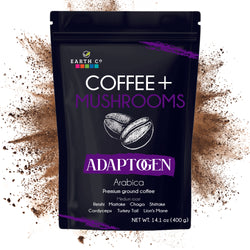
ADAPTOGEN by Earth Co Organics is a functional coffee that combines medicinal mushrooms and adaptogens for stress and focus — exactly this philosophy in action. One cup. One habit. Meaningful benefits that compound over time. That is sustainable wellness.
Frequently Asked Questions
What makes a wellness habit sustainable?
A sustainable wellness habit is one that integrates seamlessly into your existing routine without requiring excessive time, money, or willpower. Research confirms that the simpler the action and the more clearly it is attached to an existing behavior, the faster it becomes automatic and the longer it persists.
How long does it take to form a lasting health habit?
A 2010 study from UCL found it takes an average of 66 days for a new behavior to become automatic, with a range of 18 to 254 days depending on complexity. Simpler habits attached to existing routines become automatic significantly faster than complex standalone behaviors — which is why anchoring wellness to your morning coffee is so effective.
Why do complex wellness routines often fail?
Complex routines fail because they demand ongoing willpower, decision-making, and time that most people cannot consistently provide. When life gets busy or stressful, complicated protocols are the first things abandoned. Simple habits anchored to existing behaviors — like upgrading your morning coffee — persist because they require no additional effort or memory.