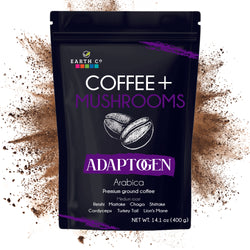
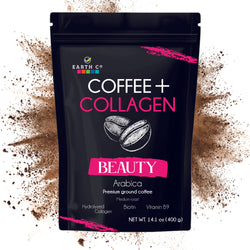
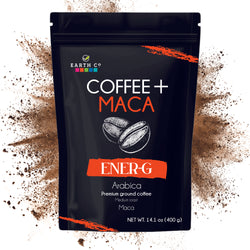
Two claims appear on coffee labels with increasing frequency and decreasing meaning. Organic. Functional. Both have become marketing currency in the US wellness market — words that signal premium positioning without necessarily delivering the substance that positioning implies. Understanding exactly what each claim means, what it does not mean, and how to distinguish genuine quality from label theater is the most useful thing any consumer of functional coffee can do before spending money in this category. Earth Co was built around the belief that informed consumers are better customers than confused ones. This is the information most brands prefer you not have.
What Organic Actually Means — and What It Does Not
USDA Organic certification for coffee is a supply chain standard, not a quality standard. It certifies that the coffee was grown without synthetic pesticides, herbicides, or fertilizers for a minimum of three years prior to certification, and that every stage of the supply chain from farm to packager has maintained documented organic handling protocols.
This is genuinely meaningful for several reasons that are directly relevant to gut health. Synthetic pesticide residues on conventional coffee beans have been identified in research as potential gut microbiome disruptors — compounds that reduce beneficial bacterial diversity through antimicrobial mechanisms that were never intended to be consumed. The 2019 paper published in Environmental Health Perspectives documenting pesticide residue effects on gut microbiome composition in human populations is among the most cited in this area. For a product specifically formulated to support gut health, organic certification eliminates a source of daily microbiome disruption that conventional coffee introduces with every cup.
However — and this is the distinction that the functional coffee marketing ecosystem routinely obscures — organic certification says nothing about whether the coffee contains any active functional compounds beyond caffeine. An organic coffee can contain zero prebiotics, zero postbiotics, zero adaptogens, zero collagen, and zero of any ingredient that produces any effect beyond a standard caffeinated beverage. The organic label certifies how the coffee was grown. It does not certify what the coffee does in your body.
This matters practically because a significant number of products in the US wellness market present themselves as health-oriented functional coffees on the basis of organic certification alone — or add trace amounts of functional ingredients at doses too low to produce any measurable biological effect while leading with the organic claim. The consumer buys expecting gut health benefits. The label technically does not lie. The product simply does not do what the consumer reasonably expected.
What Functional Actually Means — and How It Gets Abused
Functional food is a regulatory category that the US Food and Drug Administration does not formally define — which means there is no legal standard a coffee product must meet to call itself functional. Any coffee brand can use the term on any product regardless of what the product contains or at what dose.
The scientific definition of a functional food — a food that provides health benefits beyond basic nutrition through the action of specific bioactive compounds — requires that the bioactive compounds are present, that they survive processing and digestion to reach the target tissue, and that they are present at doses sufficient to produce the claimed biological effect. These three requirements are independent of each other. A product can fail any one of them while technically containing the ingredient it claims.
Presence without effective dose is the most common failure mode in the functional coffee category. An ingredient appears on the label — probiotics, adaptogens, collagen, prebiotics — but at a dose so far below the threshold identified in clinical research as meaningful that its inclusion is effectively cosmetic. The ingredient is there. The dose is not.
A useful example from adjacent supplement categories: research on ashwagandha for stress reduction has identified effective doses in the range of 300 to 600 milligrams of root extract per day. A functional coffee containing 10 milligrams of ashwagandha can legitimately list ashwagandha as an ingredient. It cannot legitimately imply that the product will reduce stress — because 10 milligrams is 3 to 6 percent of the dose range shown to produce that effect. This pattern repeats across virtually every functional ingredient category in the coffee market.
Survival without delivery is the second common failure mode — particularly relevant for products containing live probiotic cultures. A probiotic coffee can contain 10 billion CFU of live bacteria at the time of manufacture. If the specific strains used do not survive the pH of stomach acid — which research on many commercially used strains shows they do not — the live count that enters the gut is a fraction of the label claim. The product is functional by label. The delivered dose is not.
How to Read a Functional Coffee Label With These Distinctions in Mind
The framework for evaluating any functional coffee claim requires asking three sequential questions about each ingredient listed.
First: is this ingredient present at a dose consistent with the research showing the claimed effect? If the label does not list individual ingredient doses — hiding behind a proprietary blend designation — the answer is unknowable, which is itself informative. Brands that are confident in their doses list them. Brands that are not do not.
Second: does this ingredient survive the processing conditions of coffee brewing? This question is particularly relevant for live probiotic cultures, heat-sensitive enzymes, and certain botanical extracts. Postbiotics, hydrolyzed collagen peptides, and prebiotic fibers are significantly more heat-stable than live bacterial cultures — which is one of the primary formulation reasons Digest Pro uses postbiotics rather than live probiotics.
Third: does this ingredient survive digestion to reach the target tissue? This question applies differently to different ingredient types. Prebiotic fiber is designed to resist digestion and reach the colon intact — that is how it feeds gut bacteria. Hydrolyzed collagen peptides have demonstrated absorption through the intestinal wall in peer-reviewed research. Live probiotic bacteria face the gastric acid survival challenge discussed above. Understanding which ingredients pass this test and which do not explains a significant portion of why some functional products produce results and others do not.
What Earth Co's Approach to Both Claims Looks Like in Practice
Digest Pro is USDA organic certified — not because the organic label adds marketing value, but because organic certification eliminates the pesticide microbiome disruption that would directly undermine what the prebiotic and postbiotic formula is designed to accomplish. Using a conventional coffee base in a gut health product would be a formulation contradiction. The organic base is a prerequisite for internal consistency, not a marketing add-on.
The functional claims in Digest Pro rest on ingredient selection and dose calibration against peer-reviewed research rather than against label trends. The prebiotic fiber complex is present at doses consistent with the research showing measurable microbiome changes with daily use — not at the minimum dose that allows the word prebiotic to appear on the label. The postbiotic compounds are present at doses calibrated against the clinical literature on gut lining support and anti-inflammatory effects — not at trace levels that produce no measurable biological effect.
The postbiotic decision itself reflects the survival question. Live probiotics fail the gastric acid survival challenge at rates that make reliable gut delivery uncertain. Postbiotics do not face this challenge — they are already-produced stable compounds that arrive at the gut intact regardless of stomach pH. This is not a claim about proprietary technology. It is basic chemistry. Stable compounds are more reliably delivered than live organisms through an acidic environment.
The Broader Market Context
The US functional food and beverage market is projected to exceed $275 billion by 2025, according to market research published by Grand View Research. The functional coffee subcategory is among the fastest-growing segments within that market. That growth has attracted brands ranging from scientifically serious to entirely label-driven — and the consumer has no regulatory standard to rely on to distinguish between them.
This creates a market where the most important skill a functional coffee buyer can develop is the ability to evaluate ingredient claims critically — asking not just whether an ingredient is present but whether the dose, form, and delivery mechanism are consistent with the research on that ingredient's effect.
The brands that formulate around those questions produce products that work. The brands that formulate around label trends produce products that sell until the consumer notices they feel nothing different. The distinction is not always visible from the front of the package. It is almost always visible from the ingredient panel and the willingness of the brand to discuss dose transparency.
Organic certification and functional formulation are both meaningful — when they reflect genuine ingredient quality and scientifically grounded dose selection rather than marketing positioning. The market contains products where both claims are earned. It contains products where neither is. The framework above is how you tell the difference.
Try Digest Pro → https://functional-coffee.com