Lion's mane is a medicinal mushroom scientifically known as Hericium erinaceus, recognized for its potential to support brain health and nerve function. This shaggy, white fungus contains unique compounds called hericenones and erinacines that may stimulate nerve growth factor production in the brain. Lion's mane has become the most searched functional mushroom because preliminary research suggests it could support memory, focus, and cognitive longevity.
What Makes Lion's Mane Different From Other Medicinal Mushrooms
While many functional mushrooms earn their reputation through immune support, lion's mane stands apart for its focus on the nervous system. The mushroom contains two families of compounds found nowhere else in nature: hericenones, located primarily in the fruiting body, and erinacines, concentrated in the mycelium. These compounds are small enough to cross the blood-brain barrier, which is rare and significant for any natural substance.
Nerve growth factor, or NGF, is a protein essential for the survival, maintenance, and regeneration of neurons. As we age, NGF production naturally declines, which researchers believe contributes to cognitive decline. Evidence suggests that the unique compounds in lion's mane may help stimulate NGF synthesis, potentially supporting neuroplasticity and healthy brain aging. This mechanism distinguishes lion's mane from adaptogenic mushrooms like reishi or cordyceps, which work primarily through immunomodulation and stress response pathways.
The Lion's Mane Evidence: What Clinical Studies Actually Show
When evaluating any supplement, separating marketing claims from genuine research matters. Lion's mane has more human clinical trials than most functional mushrooms, though the body of evidence is still developing and most studies are small.
The most frequently cited study is a 2009 double-blind, placebo-controlled randomized trial published in Phytotherapy Research (Mori et al., PMID 18844328). Researchers from Hokuto Corporation enrolled 30 adults aged 50 to 80 with mild cognitive impairment. Participants took four 250mg tablets of lion's mane dry powder three times daily — 3g total — for 16 weeks. The lion's mane group showed significantly higher scores on the Hasegawa Dementia Scale (HDS-R) at weeks 8, 12, and 16 compared to placebo. Importantly, cognitive scores declined four weeks after participants stopped supplementation, suggesting ongoing use may be necessary for sustained benefits. Given the small sample size (n=30) and industry-affiliated research, larger independent RCTs are needed to confirm these findings.
More recent research has explored lion's mane for mood and neuroprotection. A 2022 animal study published in Frontiers in Nutrition (Chou et al., PMC9479623) found that lion's mane supplementation increased brain-derived neurotrophic factor (BDNF) levels in aged mice. BDNF is a protein crucial for learning, memory, and neuroplasticity — the brain's ability to form new neural connections throughout life. While these findings are promising, they have not yet been replicated in adequately powered human RCTs, and larger, longer-term human trials are still needed.
Understanding Beta-Glucans and Bioactive Compounds in Lion's Mane
Beta-glucans are complex polysaccharides found in the cell walls of fungi, and they serve as a useful marker for mushroom supplement quality. These compounds are responsible for much of the immunomodulation benefits associated with medicinal mushrooms. However, the cognitive benefits specific to lion's mane come primarily from the hericenones and erinacines, not the beta-glucans.
This distinction matters when choosing a lion's mane product. The fruiting body, which is the visible mushroom portion, contains higher concentrations of hericenones. The mycelium, the root-like network that grows beneath the surface, contains more erinacines. Clinical studies show that both parts offer value, so products using full-spectrum extracts or dual extraction methods may provide the broadest range of compounds. Explore Earth Co Organics' full functional coffee catalog to see how we source our functional ingredients.
Quality also depends on growing conditions and extraction methods. Mushrooms grown on their natural substrates, like hardwood, tend to produce more bioactive compounds than those grown on grain. Hot water extraction captures beta-glucans effectively, while alcohol extraction pulls out the less water-soluble hericenones and erinacines.
How Lion's Mane Supports the Stress Response and Cognitive Health
Beyond direct nerve support, emerging evidence suggests lion's mane may influence the body's stress response systems. The HPA axis, which stands for hypothalamic-pituitary-adrenal axis, governs how your body produces and regulates cortisol in response to stress. Chronic stress can dysregulate this system, leading to elevated cortisol levels that negatively impact memory, focus, and overall cognitive function.
Animal studies have shown that lion's mane extract may help modulate inflammation in the hippocampus, a brain region critical for memory formation and particularly vulnerable to stress-related damage. While human research in this area is limited, the preliminary findings align with traditional use of lion's mane in Eastern medicine for supporting mental clarity.
Combining lion's mane with other adaptogens may create complementary effects. Adaptogens are natural substances that help the body resist stressors and maintain homeostasis. When paired with compounds like ashwagandha or rhodiola, lion's mane may offer broader support — the adaptogens supporting cortisol balance while lion's mane works on neuroplasticity and nerve health.
Practical Considerations for Adding Lion's Mane to Your Routine
Dosing recommendations for lion's mane vary across studies. The most important practical guidelines based on available evidence include:
- Dose: most clinical trials showing cognitive benefits used 1.5 to 3g daily of fruiting body extract, divided across multiple servings — start lower and assess your individual response
- Consistency over immediacy: unlike caffeine, lion's mane does not produce immediate effects — benefits appear to accumulate over 8 to 16 weeks of regular daily use
- Fruiting body vs mycelium: fruiting body is higher in hericenones; mycelium in erinacines — full-spectrum or dual-extraction products may offer the broadest benefit
- Third-party testing: mushrooms absorb substances from their growing environment — verify products are tested for heavy metals and contaminants
- Delivery format: adding lion's mane to your morning coffee is an effective way to ensure consistent daily intake without adding a new habit
Start Your Morning With Functional Mushroom Support
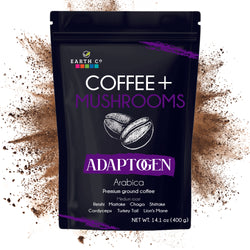
The evidence on lion's mane is genuinely interesting, even if more research is needed. For those curious about integrating this remarkable mushroom into daily life, ADAPTOGEN by Earth Co Organics is a functional coffee that combines medicinal mushrooms and adaptogens for stress and focus. Each cup delivers organic coffee enhanced with lion's mane and complementary adaptogens, designed for people who want cognitive support without adding another pill to their routine.
Research confirms that consistency matters most with lion's mane, so finding a format you will actually enjoy daily is half the battle.
Frequently Asked Questions
How long does it take for lion's mane to work?
Most studies showing cognitive benefits used lion's mane for 8 to 16 weeks before measuring results. The 2009 Mori et al. RCT showed significant HDS-R score improvements at weeks 8, 12, and 16. Some people report subtle improvements in focus within 2 to 4 weeks, but meaningful changes typically require consistent daily use over several months.
What is the best form of lion's mane to take?
Extracts made from the fruiting body tend to contain higher concentrations of hericenones, the compounds most studied for cognitive support. Mycelium extracts contain more erinacines. Look for products that specify beta-glucan content, clearly state whether they use fruiting body or mycelium, and use dual-extraction methods to capture both water-soluble and alcohol-soluble compounds.
Are there any side effects of lion's mane?
Lion's mane is generally well-tolerated with few reported side effects. The Mori et al. 2009 RCT noted mild digestive discomfort (stomach discomfort and loose stools) in some participants, which resolved without treatment. Those with mushroom allergies should avoid lion's mane, and anyone on medications should consult their healthcare provider before use.