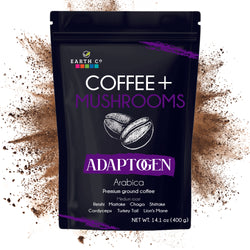
Productivity optimization has become one of the most aggressively marketed categories in American wellness — and one of the most poorly understood. The supplements, nootropics, and functional beverages that promise sharper focus, faster thinking, and sustained mental energy typically fall into one of two categories: products with genuine mechanistic evidence behind their active ingredients, and products built around placebo-adjacent claims dressed in scientific language. The distinction matters when you are making daily choices about what you put in your body to support your cognitive performance. Earth Co's MCT Coffee sits in the first category — and explaining precisely why requires going deeper into the evidence than most functional coffee brands are willing to go.
What Productivity Actually Requires Biologically
Before evaluating any ingredient's impact on productivity, it is worth establishing what productivity actually requires at the neurological level — because the answer determines which interventions can plausibly help and which cannot.
Sustained cognitive productivity depends on three biological systems functioning simultaneously and well. The first is neuronal energy metabolism — the availability of adequate fuel for the energy-intensive process of sustained focused thinking. The brain represents approximately 2 percent of body weight but consumes approximately 20 percent of total resting energy expenditure. Cognitive work increases this demand further. When the brain's primary fuel supply — glucose — becomes unstable or insufficient, cognitive performance declines in measurable and predictable ways.
The second system is neurotransmitter balance — specifically the relationship between adenosine, which accumulates during waking hours and produces fatigue, and the catecholamines dopamine and norepinephrine, which support alertness, motivation, and focused attention. Caffeine addresses this system through adenosine receptor blockade — which is why coffee works for productivity in the short term. The limitation is that adenosine blockade is temporary and does not address the underlying energy metabolism that determines whether the alertness caffeine produces translates into actual cognitive output.
The third system is neural structural health — the integrity of the myelin sheaths that insulate axons for rapid signal transmission, the density of synaptic connections that determine cognitive flexibility and learning speed, and the ongoing neurogenesis and synaptic maintenance processes that keep the neural infrastructure of productivity functioning at its biological potential. This system changes on a timeline of weeks to months rather than minutes to hours — which is why the ingredients that support it are less immediately noticeable than caffeine but more consequential for long-term cognitive performance.
Earth Co's MCT Coffee addresses all three systems simultaneously — caffeine for immediate adenosine blockade, MCT oil for sustained neuronal energy through ketone production, and lion's mane for neural structural health through nerve growth factor stimulation. Understanding each mechanism individually explains why the combination produces a cognitive performance profile that neither component achieves independently.
The MCT Oil Evidence: Ketones as Brain Fuel
Medium-chain triglycerides are a class of dietary fatty acids distinguished from long-chain fatty acids by their carbon chain length — 6 to 12 carbons compared to the 14 to 22 carbons of long-chain fatty acids found in most dietary fat sources. This structural difference produces a fundamentally different metabolic pathway that is the entire basis of MCT oil's cognitive performance relevance.
Long-chain fatty acids require packaging into chylomicrons — large lipoprotein particles — for transport through the lymphatic system before entering the bloodstream. This indirect pathway produces fat-derived energy availability on a slow timeline measured in hours. Medium-chain triglycerides bypass this pathway. Their shorter chain length allows direct absorption from the small intestine into the portal vein, which carries them to the liver where they undergo rapid beta-oxidation and conversion to ketone bodies — primarily beta-hydroxybutyrate and acetoacetate.
Ketone bodies are water-soluble molecules that cross the blood-brain barrier through monocarboxylate transporters — the same transporters that carry lactate across the barrier — and are oxidized directly by neurons for ATP production. The metabolic pathway from MCT consumption to neuronal energy availability is significantly faster than the pathway from long-chain fat consumption, and the resulting ketone elevation persists for three to five hours after consumption — a duration that is directly relevant to sustained cognitive performance.
Research published in the journal Neurobiology of Aging documented improved cognitive test performance in subjects with mild cognitive impairment following MCT supplementation, with performance improvements correlating with blood ketone levels. Research from the journal Frontiers in Aging Neuroscience extended these findings to demonstrate that MCT-induced ketosis produced measurable improvements in working memory and processing speed in older adults with normal cognition. Research published in the European Journal of Clinical Nutrition found that MCT supplementation improved performance on cognitive tasks requiring sustained attention in healthy young adults — demonstrating that the cognitive benefits extend beyond clinical populations to the healthy working population most relevant to productivity applications.
The mechanism is straightforward and well-supported: MCTs provide the liver with substrate for rapid ketone production, ketones provide neurons with an alternative fuel source that is not subject to the blood glucose fluctuations that underlie cognitive variability through the day, and the resulting sustained neuronal energy availability supports cognitive performance through the afternoon window when glucose-dependent energy typically declines.
The dose-response relationship for MCT cognitive effects has been investigated in multiple studies. Cognitive benefits have been documented at doses as low as 5 to 10 grams of MCTs per serving — a range consistent with what a well-formulated MCT coffee delivers. Higher doses produce higher blood ketone levels but also increase the likelihood of gastrointestinal discomfort in users who are not adapted to MCT consumption — which is why Earth Co's MCT Coffee formula is calibrated within the range that produces cognitive effects while remaining well tolerated for daily use.
The Lion's Mane Evidence: Nerve Growth Factor and Neural Structural Health
Lion's mane mushroom — Hericium erinaceus — has been used in East Asian traditional medicine for centuries and has been the subject of rigorous modern scientific investigation for approximately three decades. The mechanistic basis for its cognitive effects is better characterized than most botanical ingredients in the nootropic category — which is both why it belongs in a productivity-focused formula and why the specific claims made about it can be evaluated against an actual evidence base.
The primary bioactive compounds in lion's mane for cognitive purposes are hericenones — found in the fruiting body of the mushroom — and erinacines — found in the mycelium. Both compound classes have demonstrated the ability to stimulate nerve growth factor synthesis in neural tissue through mechanisms that are now reasonably well characterized at the molecular level.
Nerve growth factor is a neurotrophin — a protein that supports the survival, maintenance, and function of specific neuron populations. In the context of cognitive performance, nerve growth factor is most relevant to cholinergic neurons in the basal forebrain — the neural population most directly associated with learning, memory consolidation, and the cognitive flexibility that underlies productive thinking. Research published in the Journal of Agricultural and Food Chemistry documented that hericenones isolated from lion's mane fruiting body induced significant upregulation of nerve growth factor synthesis in human astrocyte cultures — establishing the cellular mechanism through which dietary lion's mane consumption influences neural function.
The translation from cellular mechanism to human cognitive performance has been examined in clinical trials. A randomized, double-blind, placebo-controlled trial published in Phytotherapy Research enrolled 30 Japanese adults over 50 with mild cognitive impairment and found that subjects consuming lion's mane fruiting body extract for 16 weeks performed significantly better on cognitive function tests than placebo subjects — with the improvement being specific to measures of cognitive processing and memory rather than mood or motivation. A separate study published in Biomedical Research examined the effects of lion's mane consumption on anxiety and concentration in healthy adults and found improvements in concentration and reduced anxiety scores relative to placebo after four weeks of supplementation.
The timeline of lion's mane effects is important to understand correctly for productivity purposes. Nerve growth factor-mediated improvements in neural function are not immediate. The cellular signaling cascade from hericenone exposure to increased nerve growth factor production to structural improvements in neural tissue operates over weeks rather than minutes. This means lion's mane does not produce an acute cognitive effect on the morning you first consume it — it produces progressive improvements in the neural substrate of cognitive performance over four to eight weeks of consistent daily consumption.
This timeline distinction is significant for managing expectations and for understanding why Earth Co's MCT Coffee produces different cognitive experiences at different points in consistent daily use. The MCT component provides an acute cognitive effect — measurable on the first day of consumption through sustained ketone availability through the afternoon. The lion's mane component provides a progressive cognitive effect — measurable after weeks of daily consumption through improvements in the neural structural health that determines the ceiling of cognitive performance.
How Caffeine, MCT Oil, and Lion's Mane Work Together
Each of the three active components in Earth Co's MCT Coffee addresses a distinct mechanism of cognitive performance. The productive combination is not simply additive — it is synergistic in ways that each component's individual mechanism explains.
Caffeine blocks adenosine receptors in the brain, reducing the fatigue signal that accumulates during waking hours and producing the immediate alertness that makes the first hour after coffee consumption the most reliably productive for most people. This mechanism is acute, well-established, and universally experienced. Its limitation is equally well-established: adenosine blockade is temporary, adenosine continues to accumulate behind the blockade, and the rebound when caffeine clears produces the fatigue that characterizes the late morning or early afternoon for conventional coffee drinkers.
MCT oil addresses the energy substrate limitation that caffeine cannot. By providing ketones as an alternative neuronal fuel source independent of blood glucose, MCT supplementation extends productive cognitive capacity through the period when glucose-dependent energy declines — the afternoon window that conventional caffeine management cannot reach. Research has documented that caffeine and MCTs together produce a more sustained cognitive performance profile than caffeine alone — with the MCT component specifically attenuating the post-caffeine cognitive decline that characterizes conventional coffee consumption.
Lion's mane addresses the structural baseline on which both caffeine and MCT effects operate. Caffeine blocks adenosine fatigue. MCTs provide alternative fuel. Both mechanisms operate on the neural infrastructure that exists at the time of consumption. Lion's mane improves that infrastructure over time — supporting the cholinergic neuron populations most relevant to learning and memory, stimulating nerve growth factor production that maintains neural connectivity, and creating the structural conditions under which both caffeine and MCT provide their effects on a higher-functioning neural substrate.
The practical consequence is that Earth Co's MCT Coffee produces a different cognitive experience at week eight of consistent daily use than it does on day one — not because the caffeine or MCT component has changed, but because the lion's mane component has progressively improved the neural structural health on which those components operate. The acute effects are present from the first cup. The compound effects accumulate over months of consistent daily consumption.
What the Research Does Not Yet Fully Establish
Intellectual honesty about the evidence base requires acknowledging where the research is robust and where it has limitations.
The MCT evidence for cognitive performance is strong and mechanistically well-understood — the metabolic pathway from MCT consumption to ketone production to neuronal energy availability is fully characterized, and human clinical evidence supports cognitive performance benefits in both healthy and cognitively impaired populations. The primary limitation is that most human trials have used MCT doses higher than typical functional food serving sizes and have enrolled populations with existing cognitive concerns — extrapolation to healthy working adults at standard serving doses is supported by mechanism but less directly supported by clinical trial data in that specific population.
The lion's mane evidence for cognitive performance is mechanistically well-supported and clinically documented in older adults with mild cognitive impairment. The evidence in healthy young to middle-aged working adults — the primary productivity optimization demographic — is less extensive and represents an area where more research is needed. The nerve growth factor stimulation mechanism is established and the human clinical evidence is genuinely promising. The most rigorously controlled trials in healthy adult populations with cognitive performance as the primary endpoint remain an active area of research rather than a fully settled question.
This is the honest state of the evidence — significantly more robust than most nootropic ingredients in the functional beverage category, not yet at the level of pharmaceutical certainty. For daily consumption decisions about a food product built on these ingredients, the mechanistic evidence combined with the available human clinical evidence supports their inclusion in a productivity-focused formula. For anyone expecting certainty equivalent to pharmaceutical clinical trials, that standard does not yet exist for any dietary ingredient in this category.
The Productivity Application
The practical productivity implication of everything above is straightforward to summarize. Earth Co's MCT Coffee is formulated to address the three biological limitations that most commonly constrain productive cognitive output: the adenosine-driven fatigue that caffeine manages acutely, the glucose-dependent energy instability that MCT oil addresses through sustained ketone production, and the neural structural baseline that lion's mane supports progressively through nerve growth factor stimulation.
The result is not unlimited cognitive capacity. It is the removal of three specific biological bottlenecks that limit cognitive performance for most American adults who consume conventional coffee daily — delivered through the morning ritual that is already perfectly consistent and requires no new behavior.
That is the evidence-based case for functional coffee and productivity. Not magic. Not marketing language dressed as science. Specific mechanisms, specific ingredients, specific outcomes — and the honest acknowledgment of where the evidence is strong and where it is still developing.