Collagen type I, II, and III are the three most common forms of collagen in the human body, each serving distinct structural functions. Type I collagen is the most abundant, comprising about 90% of your body's collagen and primarily supporting skin, bones, and connective tissue. For skin health and beauty purposes, types I and III are the most beneficial choices.
Understanding Collagen Types: What Makes Each One Different
Collagen is the most abundant protein in your body, acting as the structural scaffolding that holds everything together. Your body contains at least 28 different types of collagen, but types I, II, and III account for 80-90% of all collagen in humans. Understanding these differences helps you choose the right supplement for your specific health goals.
Type I collagen is the strongest and most prevalent form, found in your skin, bones, tendons, and organs. Type II collagen is a specialized form that exists almost exclusively in cartilage, making it essential for joint health. Type III collagen often appears alongside type I and plays a crucial role in maintaining the structure of your dermis, blood vessels, and hollow organs.
At a glance, here is how the three types compare for supplementation purposes:
- Type I: most abundant in the body — primary structural collagen in skin, bones, and tendons — the most relevant for beauty goals
- Type II: found almost exclusively in cartilage — best suited for joint health, not skin or hair
- Type III: works alongside Type I in the dermis and blood vessels — supports skin flexibility and is often naturally present in Type I collagen sources
Collagen Type I: The Foundation of Youthful Skin
Type I collagen is the primary structural protein in your dermis, the thick middle layer of skin where elasticity and firmness originate. A 2019 systematic review published in the Journal of Drugs in Dermatology (Choi et al., PMID 30681787) analyzed 11 randomized controlled trials with 805 patients and found that oral collagen supplementation increased skin elasticity, hydration, and dermal collagen density. Studies using 2.5 to 10 grams of collagen hydrolysate daily for 8 to 24 weeks showed the most consistent results.
Fibroblasts are the specialized cells in your dermis responsible for producing collagen, elastin, and other components of the extracellular matrix. As you age, fibroblast activity decreases, leading to reduced collagen synthesis. By age 40, you may be losing approximately 1% of your collagen per year, which manifests as fine lines, wrinkles, and loss of skin firmness.
Hydrolyzed type I collagen has been broken down into smaller peptides that your body can absorb more efficiently. These peptides travel through your bloodstream to the dermis, where they signal fibroblasts to increase collagen production — a well-documented mechanism that makes supplementation an effective strategy for supporting your body's natural collagen levels.
Type II Collagen: The Joint Health Specialist
Type II collagen serves a completely different purpose than types I and III. This collagen type is found almost exclusively in cartilage, the flexible tissue that cushions your joints and prevents bone-on-bone contact. If your primary concern is joint health rather than skin appearance, type II collagen is the appropriate choice.
Research suggests that type II collagen supplementation may support joint comfort and mobility, particularly in individuals experiencing age-related joint concerns. However, for those focused on beauty benefits like skin elasticity, hair strength, and nail growth, type II collagen offers limited advantages. The specialized structure of type II collagen makes it poorly suited for supporting the dermis or other skin-related structures. Matching your collagen type to your health goals is essential — taking type II for skin benefits is like choosing the wrong tool for a job.
Type III Collagen: The Perfect Partner for Type I
Type III collagen works synergistically with type I to maintain skin structure and elasticity. Found in the dermis, blood vessels, and internal organs, type III collagen provides flexibility and support to tissues that need to stretch and move. In youthful skin, type III collagen is particularly abundant — which is why quality collagen supplements typically include both types.
Research in the dermatology literature confirms that the relative abundance of collagen types in skin changes with aging, with flexible collagen components declining alongside total collagen production. A 2019 randomized controlled trial published in Nutrients (Bolke et al., PMC6835901) found that a collagen peptide supplement significantly improved skin hydration, elasticity, roughness, and density in 72 women over 12 weeks — outcomes consistent with restoration of the dermal collagen matrix that includes both type I and type III.
Keratin, another structural protein, works alongside collagen to support hair and nail health. While keratin provides hardness and protection, collagen supports the underlying structures that nourish hair follicles and nail beds. A comprehensive beauty supplement addresses multiple protein needs simultaneously.
Which Collagen Type You Actually Need for Beauty Goals
If your goals include improving skin elasticity, reducing the appearance of fine lines, strengthening hair, or supporting nail growth, clinical studies consistently show that type I collagen delivers the most relevant benefits. Type III collagen serves as an excellent complement, supporting the flexible components of your skin structure.
Hydrolyzed collagen peptides from bovine or marine sources are naturally rich in types I and III, which is why these sources are the most studied and best-supported for skin health applications. The hydrolyzation process breaks collagen into bioavailable peptides that your digestive system can absorb efficiently — intact collagen molecules are too large to cross the intestinal wall.
When evaluating collagen supplements, check whether the product specifies the collagen types included. Many generic supplements fail to disclose this information, making it impossible to verify you are getting the right types for your goals. Explore Earth Co Organics' full functional coffee catalog for full ingredient transparency on each blend.
How Earth Co Formulates BEAUTY for Maximum Collagen Benefits
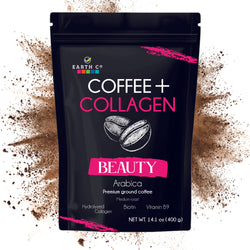
BEAUTY by Earth Co Organics is a functional coffee that combines hydrolyzed collagen and biotin for skin, hair, and nails, using type I and type III collagen chosen specifically for their proven beauty benefits. This deliberate formulation ensures you are getting collagen types that research confirms are most effective for skin elasticity, hair strength, and nail health.
The hydrolyzed collagen in BEAUTY has been enzymatically processed to create small peptides with high bioavailability. These peptides are absorbed in your small intestine and distributed throughout your body, including to fibroblasts in your dermis. The addition of biotin complements collagen's structural benefits by supporting keratin production for stronger hair and nails.
Combining collagen with your morning coffee offers a practical advantage: consistency. The most important factor in collagen supplementation is taking it regularly over time — clinical studies showing skin benefits used daily intake for 8 to 24 weeks. By integrating collagen into a daily habit you already have, you are far more likely to maintain the consistency needed for visible results.
Start Your Collagen Journey with Earth Co BEAUTY
Understanding the differences between collagen types empowers you to make informed choices about your supplement routine. For skin, hair, and nail benefits, types I and III deliver the results that clinical research supports. Generic collagen supplements that do not specify their collagen types may leave you guessing about what you are actually consuming.
BEAUTY by Earth Co Organics takes the guesswork out of collagen supplementation. Each cup delivers the specific collagen types your body needs to support elasticity, firmness, and overall beauty from within. Make your morning coffee work harder for your skin.
Frequently Asked Questions
What is the difference between collagen type I, II, and III?
Type I collagen is the most abundant and supports skin, bones, and tendons — making it the primary target for beauty supplementation. Type II collagen is found primarily in cartilage and is best suited for joint health. Type III collagen works alongside type I to support skin elasticity and blood vessel structure, and is commonly found together with type I in hydrolyzed collagen supplements.
Which collagen type is best for skin health?
Type I collagen is considered the most beneficial for skin health because it makes up approximately 80% of the collagen in your dermis. Type III collagen also supports skin structure and flexibility and is often present alongside type I in quality supplements from bovine or marine sources. Clinical research on oral collagen supplementation for skin outcomes has primarily used hydrolyzed sources containing types I and III.
Can you take multiple collagen types together?
Yes, taking multiple collagen types together is safe and beneficial. Many hydrolyzed collagen supplements naturally contain types I and III, which work synergistically to support skin, hair, and nail health. If you are targeting both joint and skin health, you can supplement type II separately from types I and III, as they are typically sourced differently.