Collagen and joints share a fundamental relationship — collagen is the primary structural protein in cartilage, tendons, and ligaments, making up roughly 70-90% of their dry weight. For athletes and active people experiencing joint discomfort or looking to protect their connective tissue, collagen supplementation has emerged as a promising intervention supported by growing clinical evidence.
Understanding Collagen and Joints: The Science Behind the Connection
Collagen is a family of proteins that provides structural integrity to connective tissues throughout the body. In joints specifically, type II collagen forms the primary framework of articular cartilage — the smooth, cushioning tissue that allows bones to glide against each other without friction. This cartilage acts as a shock absorber during movement, protecting bone surfaces from the repetitive impact of running, jumping, and lifting.
Fibroblasts are the specialized cells responsible for producing collagen in connective tissue. These cells synthesize procollagen molecules that assemble into the strong, rope-like fibers giving tendons and ligaments their remarkable tensile strength. For athletes, this collagen network endures enormous mechanical stress with every training session.
The challenge is that collagen production naturally declines with age, beginning around age 25 and accelerating after 40. High-impact activities can accelerate collagen degradation in joint tissues, potentially outpacing the body's repair capacity. This imbalance contributes to the joint stiffness and discomfort many active adults experience over time.
Understanding this biology helps explain why supplemental collagen has attracted scientific interest. By providing the specific amino acids — particularly glycine, proline, and hydroxyproline — that fibroblasts need, collagen peptides may support the body's natural repair processes.
What Clinical Research Reveals About Collagen and Joints
The evidence supporting collagen for joint health has strengthened considerably over the past decade. Multiple randomized controlled trials have examined collagen peptides in both athletic and general populations, with encouraging results for joint comfort and function.
A 2017 randomized controlled trial published in Applied Physiology, Nutrition, and Metabolism (PMID 28177710) found that athletes who supplemented with 5 grams of specific collagen peptides daily for 12 weeks showed statistically significant improvements in activity-related knee joint pain compared to placebo. The study included 139 subjects with functional knee problems and used a validated pain scale assessed by both participants and physicians.
Research also supports the role of vitamin C-enriched gelatin in collagen synthesis. A 2017 randomized crossover study published in the American Journal of Clinical Nutrition (PMID 27852613) found that consuming 15 grams of vitamin C-enriched gelatin one hour before exercise doubled circulating collagen synthesis markers compared to placebo, and improved the mechanical properties of engineered ligaments. This supports the practice of taking collagen with vitamin C before activity.
The mechanism appears to involve more than just providing raw materials. Research indicates that collagen peptides may stimulate chondrocytes — the cells that maintain cartilage — to increase their own collagen and proteoglycan synthesis. This bioactive signaling effect means collagen peptides act as more than simple building blocks.
How Collagen and Joints Relate Across Different Connective Tissues
Joint health involves more than just cartilage. Tendons connect muscles to bones, ligaments connect bones to other bones, and both structures rely heavily on type I collagen for their strength and elasticity. Athletes stressing these tissues through repetitive movements may benefit from comprehensive connective tissue support.
Elasticity is a key property of healthy connective tissue, allowing tendons and ligaments to stretch under load and return to their original shape. Collagen fibers work alongside elastin to provide this crucial mechanical property. When collagen becomes damaged or degraded, tissues lose their resilience and become more prone to injury.
The skin's deeper dermis layer also contains abundant collagen and often serves as a visible indicator of overall collagen status. Many athletes notice improvements in skin elasticity alongside joint benefits when supplementing with collagen — reflecting systemic effects on connective tissue throughout the body. Explore Earth Co Organics' full functional coffee catalog to find blends designed to support these processes.
Optimizing Collagen Absorption for Joint Health
Not all collagen supplements deliver equal results. The form, dosage, and timing of collagen intake can significantly influence its effectiveness for joint support. Understanding these factors helps athletes maximize their investment in connective tissue health.
Collagen peptides, also called hydrolyzed collagen, are collagen proteins broken down into smaller fragments that the digestive system can absorb more efficiently. These peptides are small enough to pass through the intestinal barrier and enter the bloodstream, where they can travel to joint tissues.
Vitamin C is an essential cofactor for the enzymes that synthesize collagen in the body. Taking collagen alongside vitamin C — as demonstrated in the Shaw et al. study — supports the conversion of supplemental collagen into functional tissue. Many collagen supplements now include vitamin C for this reason.
When optimizing collagen supplementation for joint health, consider these practical factors:
- Dose: most clinical trials showing joint benefits used 5–10 grams of hydrolyzed collagen daily
- Timing: consuming collagen 30–60 minutes before exercise may improve delivery to connective tissues when blood flow increases
- Vitamin C: pair collagen with a vitamin C source to support synthesis enzymes
- Consistency: studies showing benefits ran for 12–24 weeks — sporadic use is unlikely to produce structural changes
Collagen and Joints in Different Athletic Populations
Different sports and activities place unique demands on the musculoskeletal system. Runners face repetitive impact stress on knee and hip joints. Weightlifters challenge their tendons and ligaments with heavy loads. Swimmers and cyclists may experience less joint impact but still stress their connective tissue through high training volumes.
Evidence suggests collagen supplementation may benefit athletes across these varied populations. The key appears to be the cumulative stress on connective tissue rather than the specific type of activity. Any athlete training consistently at moderate to high intensity is likely degrading collagen faster than a sedentary person and may benefit from additional support.
Age also influences collagen needs. Masters athletes — those over 35 competing in their sports — face the dual challenge of age-related collagen decline and training-induced stress. For this population, proactive collagen supplementation may be particularly valuable for maintaining joint function and extending athletic careers.
Integrating Collagen and Joint Support Into Your Daily Routine
Consistency matters more than perfection when it comes to collagen supplementation. The studies showing joint benefits typically lasted 12–24 weeks with daily intake, suggesting that sporadic use is unlikely to produce meaningful results. Building collagen into an existing daily habit increases the likelihood of sustained compliance.
Many athletes find morning coffee an ideal vehicle for collagen peptides. Collagen powder dissolves easily in hot beverages without significantly affecting taste or texture. This approach combines the energizing ritual of coffee with the functional benefit of joint support.
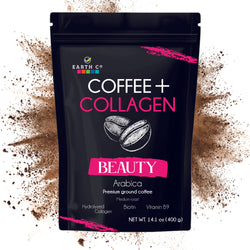
BEAUTY by Earth Co Organics is a functional coffee that combines hydrolyzed collagen and biotin for skin, hair, and nails — offering a convenient way to integrate collagen into your morning routine without adding another supplement to remember. Each serving delivers bioavailable collagen peptides alongside the focus and energy benefits of quality organic coffee.
Beyond supplementation, whole-food sources of collagen include bone broth, chicken skin, and fish with edible bones. A combination of dietary collagen and targeted supplementation offers a comprehensive approach to connective tissue support.
Experience the Difference Quality Collagen Can Make for Your Joints
The evidence supporting collagen for joint health continues to grow, offering real options for athletes and active people seeking to protect their connective tissue and maintain mobility. While collagen is not a cure for joint problems, clinical studies show it can meaningfully support joint comfort and function when used consistently over time.
Your joints carry you through every workout, every adventure, and every active moment. Supporting them with the building blocks they need is about optimizing your capacity to move well and feel good doing it. Quality collagen supplementation, combined with smart training and adequate recovery, creates a foundation for lasting joint health.
Frequently Asked Questions
How much collagen should athletes take for joint health?
Most clinical studies showing joint benefits used 5–10 grams of hydrolyzed collagen peptides daily. Taking collagen 30–60 minutes before exercise with a vitamin C source may improve its effectiveness. Consistency over at least 12 weeks matters more than precise timing.
How long does it take for collagen to help joint pain?
Clinical studies typically show measurable improvements in joint comfort and function after 12–24 weeks of consistent collagen supplementation. Some people notice subjective improvements sooner, but structural changes in cartilage and connective tissue require sustained daily intake over months.
Does collagen help tendons and ligaments as well as cartilage?
Yes. Type I collagen makes up approximately 70–90% of the dry weight of tendons and ligaments, and type II collagen dominates cartilage. Hydrolyzed collagen supplementation provides amino acids relevant to both tissue types, making it broadly useful for athletes stressing multiple connective tissue structures.