Collagen and hair health are closely connected because collagen provides structural support to the dermis, the skin layer where hair follicles are rooted. Collagen supplementation may improve hair strength, thickness, and growth by delivering amino acids like proline and glycine that your body uses to build keratin, the protein that makes up 95% of your hair. Most research suggests visible results take 3 to 6 months of consistent use.
Understanding Collagen and Hair Growth at the Cellular Level
To understand why collagen matters for your hair, you need to know what happens beneath your scalp. Hair follicles are embedded in the dermis, a layer of skin composed largely of collagen fibers. This dermal matrix provides the structural foundation that keeps follicles anchored and nourished.
Fibroblasts are the cells responsible for producing collagen in the dermis. As we age, fibroblast activity decreases, leading to reduced collagen production and a weaker dermal structure. This decline can compromise the hair follicle environment, potentially contributing to thinner, more brittle hair over time.
Collagen also serves as a reservoir of amino acids. When you consume hydrolyzed collagen, your body breaks it down into amino acids like proline, glycine, and hydroxyproline. These building blocks can then be used to synthesize keratin, the fibrous protein that gives hair its strength and elasticity.
What the Science Says About Collagen and Hair Health
Research on collagen specifically for hair is still emerging, but the existing evidence offers promising insights. A 2019 systematic review published in the Journal of Drugs in Dermatology (Choi et al., PMID 30681787) analyzed 11 randomized controlled trials with 805 patients and found that oral collagen supplementation significantly improved skin elasticity, hydration, and dermal collagen density — all markers of dermal health that indirectly support the environment in which hair follicles function.
A 2019 randomized placebo-controlled trial published in Nutrients (PMC6835901) confirmed that a collagen peptide supplement significantly improved skin hydration, elasticity, roughness, and density in 72 women over 12 weeks. These structural improvements to the dermal layer are directly relevant to hair follicle anchoring and the scalp environment that supports healthy growth.
The amino acid profile of collagen is particularly relevant for hair. Proline is a key component of keratin, and glycine supports the body's production of glutathione, a powerful antioxidant that helps protect cells — including hair follicle cells — from oxidative damage. Clinical studies show these mechanisms work together to create a more favorable environment for healthy hair growth.
How Long Does Collagen and Hair Improvement Take?
Understanding the hair growth cycle helps set realistic expectations. Hair grows in three phases: anagen (growth), catagen (transition), and telogen (rest). The anagen phase typically lasts 2 to 7 years, but the visible portion of new growth takes time to emerge from the scalp.
Most people report noticing initial changes in hair texture and reduced breakage after 8 to 12 weeks of daily collagen supplementation. These early improvements reflect stronger hair shafts and better moisture retention in existing strands.
For more significant results like increased thickness and faster growth, you should expect to wait 3 to 6 months. This timeline allows new hair to grow through multiple cycles while the dermal environment continues to improve. Patience is essential because hair grows only about half an inch per month on average.
Factors like your baseline collagen levels, age, diet, and overall health can influence how quickly you see results. Younger individuals with mild concerns may notice changes faster than those with more advanced hair thinning. Explore Earth Co Organics' full functional coffee catalog to find blends formulated with hair-supporting ingredients.
Choosing the Right Collagen for Hair and Scalp Support
Not all collagen supplements are created equal. Hydrolyzed collagen, also called collagen peptides, has been broken down into smaller molecules for better absorption. This increased bioavailability means more amino acids reach your bloodstream and can be utilized by your body.
Type I collagen is the most abundant form in human skin and is considered the best choice for hair support. It makes up approximately 80% of the dermis and provides the structural framework for hair follicles. Look for supplements that specify Type I or marine collagen for optimal hair benefits.
When evaluating a collagen supplement for hair support, consider these key factors:
- Form: hydrolyzed collagen peptides have superior bioavailability compared to unprocessed collagen
- Type: Type I collagen is most relevant for skin and hair; marine collagen is a well-absorbed source
- Dose: clinical studies showing dermal benefits used 2.5–10 grams daily for 8–24 weeks
- Complementary nutrients: vitamin C, biotin, and zinc all support collagen synthesis and keratin production
Dosage matters as well. Consistency is more important than taking large doses sporadically. Taking collagen at the same time each day — ideally with your morning coffee — helps establish a routine that supports long-term results.
Lifestyle Factors That Enhance Collagen's Effects on Hair
Supplementation works best when paired with healthy lifestyle habits. Your body needs vitamin C to synthesize collagen, so ensuring adequate intake through citrus fruits, berries, or supplements is essential. Without sufficient vitamin C, even high-quality collagen supplements cannot be fully converted into functional tissue.
Protein intake from whole foods provides additional amino acids that support hair growth. Eggs, fish, and legumes offer complementary nutrients that work alongside collagen peptides. A balanced diet creates the nutritional foundation your follicles need to thrive.
Stress management also plays a role. Chronic stress can trigger telogen effluvium, a condition where hair prematurely enters the resting phase and sheds excessively. Reducing stress through exercise, sleep, and mindfulness supports the hormonal balance necessary for healthy hair cycles.
Avoiding excessive heat styling and harsh chemical treatments protects the hair you are working to grow. Collagen can strengthen new growth, but it cannot repair damage from external stressors. Gentle hair care practices maximize the benefits of your supplementation routine.
Start Your Collagen and Hair Health Journey with Functional Coffee
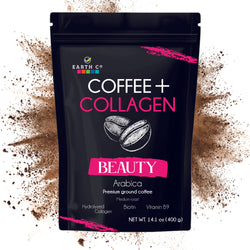
If you are looking for a convenient way to incorporate collagen into your daily routine, BEAUTY by Earth Co Organics is a functional coffee that combines hydrolyzed collagen and biotin for skin, hair, and nails. This blend lets you support your hair goals while enjoying your morning cup, making consistency effortless.
Collagen provides the structural amino acids your dermis needs, while biotin supports keratin synthesis — two complementary approaches to hair health in a single daily serving. By choosing a product designed with these ingredients together, you optimize your daily routine for long-term results.
Frequently Asked Questions
How long does it take for collagen to improve hair?
Most people begin noticing improvements in hair texture and strength after 8 to 12 weeks of consistent collagen supplementation. Visible changes in hair thickness and growth rate typically become apparent between 3 to 6 months, as hair follicles complete their growth cycles.
What type of collagen is best for hair growth?
Type I collagen is considered most beneficial for hair because it makes up the majority of the dermis where hair follicles are anchored. Hydrolyzed collagen peptides are preferred since they have better bioavailability and can be absorbed more efficiently by the body.
Can collagen reverse hair thinning?
Collagen may help address hair thinning caused by aging or nutritional deficiencies by supporting the dermal layer and providing amino acids essential for keratin production. However, collagen cannot reverse hair loss caused by genetic factors or hormonal conditions like androgenetic alopecia.