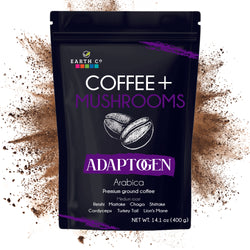
The relationship between coffee, functional ingredients, and sleep is more nuanced than either the reassuring marketing claims or the blanket caffeine warnings suggest. Here is the complete picture — what caffeine actually does to sleep, what adaptogens and other functional ingredients do to the cortisol curve that governs sleep quality, and how timing determines whether your functional coffee works for you around the clock or against you after dark.
What Caffeine Actually Does to Sleep — The Mechanism Most People Misunderstand
The popular understanding of caffeine and sleep is approximately correct in broad outline and significantly incomplete in the details that determine practical decisions. Most people know that caffeine keeps you awake. Fewer people understand the specific mechanism well enough to make informed decisions about timing.
Caffeine produces its wakefulness effect by blocking adenosine receptors throughout the brain. Adenosine is a byproduct of neuronal energy metabolism that accumulates continuously during waking hours — the more neural activity, the faster adenosine accumulates. As adenosine concentrations rise through the day, it binds to adenosine receptors and produces progressive feelings of fatigue and sleepiness that constitute the biological pressure to sleep. Caffeine is a structural analog of adenosine — similar enough in molecular shape to occupy adenosine receptors without activating them, blocking the fatigue signal without providing the sleep pressure release that adenosine binding normally produces.
The critical implication of this mechanism is that caffeine does not eliminate adenosine. It masks it. While caffeine occupies your adenosine receptors, adenosine continues to accumulate — building behind the blockade. When caffeine is eventually metabolized and cleared from your receptors, the accumulated adenosine rushes in simultaneously, producing the fatigue rebound that many coffee drinkers experience in the late afternoon or evening.
The duration of caffeine's receptor occupancy is determined by its half-life — the time required for your body to metabolize half of the consumed caffeine. The half-life of caffeine in healthy adults averages approximately five to six hours, with significant individual variation based on genetic differences in the CYP1A2 enzyme that metabolizes caffeine in the liver. For a person with average caffeine metabolism who drinks a cup of coffee at 8am, half of the caffeine remains in their system at 1 to 2pm, and a meaningful fraction — approximately 25 percent — remains at 6 to 7pm. For slow caffeine metabolizers, these numbers extend substantially further.
Research published in the Journal of Clinical Sleep Medicine found that caffeine consumed six hours before bedtime produced measurable reductions in sleep quality even when subjects did not perceive significant difficulty falling asleep — suggesting that caffeine's effects on sleep architecture extend beyond the obvious subjective difficulty with sleep onset. The practical implication for a coffee drinker targeting a 10pm bedtime is that any coffee consumed after approximately 2pm has the potential to meaningfully reduce sleep quality regardless of whether they feel alert at bedtime.
The Cortisol Timing Problem That Conventional Coffee Creates
Beyond the adenosine mechanism, conventional coffee consumption creates a second sleep-relevant problem through its effects on cortisol — the alertness hormone whose natural daily curve is the foundation of healthy sleep-wake regulation.
Cortisol follows a diurnal pattern — high in the morning to support wakefulness, declining gradually through the day, reaching its lowest levels in the early morning sleep hours. This pattern is the biological basis of circadian rhythm. When cortisol is high, sleep is difficult. When cortisol is low, sleep comes naturally. Disrupting this pattern — by consuming conventional coffee at times that produce cortisol spikes outside the natural morning peak — can compromise the evening cortisol decline that healthy sleep onset requires.
The most sleep-relevant cortisol disruption from conventional coffee consumption is not the morning cup — which amplifies the naturally occurring morning cortisol peak in ways that are largely consistent with the intended circadian pattern. It is the afternoon cup, which produces a cortisol spike during the period when cortisol is supposed to be declining toward its nighttime nadir. A cortisol elevation at 2pm delays the cortisol decline curve by hours — which means the low-cortisol state that supports sleep onset may not be reached until later than the biological circadian rhythm would naturally produce it.
This afternoon cortisol disruption is independent of caffeine half-life effects. It is a separate mechanism that compounds the adenosine masking problem — and it explains why the afternoon coffee that seems to solve the energy problem in the moment is disproportionately damaging to sleep quality relative to the modest alertness benefit it provides.
What Adaptogens Do to the Cortisol Curve
The adaptogens in Earth Co's functional coffee products — particularly ashwagandha and reishi — interact with the cortisol system in ways that are directly relevant to sleep quality, and those interactions are more nuanced than most functional coffee marketing communicates.
Ashwagandha is classified as an adaptogen based on its documented ability to modulate the hypothalamic-pituitary-adrenal axis — the hormonal system that regulates cortisol secretion. Research published in the Journal of the International Society of Sports Nutrition found that ashwagandha supplementation at 300 milligrams twice daily for eight weeks produced significant reductions in perceived stress and salivary cortisol levels relative to placebo in chronically stressed adults. A separate study published in the Indian Journal of Psychological Medicine documented that ashwagandha supplementation reduced serum cortisol levels by approximately 27 percent relative to placebo over a 60-day supplementation period.
The sleep-relevant implication of ashwagandha's cortisol-modulating effect is that it attenuates the cortisol spike that conventional caffeine consumption produces — reducing the amplitude of the morning cortisol peak and, consequently, the cortisol disruption that carries into the evening. Ashwagandha consumed in the morning alongside caffeine produces a lower cortisol response to the caffeine than caffeine alone would produce — which means a smaller cortisol elevation to decline from through the day and a more natural cortisol nadir in the evening hours when sleep is attempted.
Research published in Cureus specifically examined ashwagandha's effects on sleep quality and found that 600 milligrams of ashwagandha root extract daily for eight weeks improved sleep quality scores, sleep onset latency, and sleep efficiency in subjects with self-reported poor sleep. The mechanism proposed by the authors included both cortisol reduction and the direct effects of triethylene glycol — a compound in ashwagandha — on non-rapid-eye-movement sleep induction.
Reishi mushroom — included in some Earth Co formulations — has demonstrated adaptogenic and sleep-supportive properties through distinct mechanisms. Research has identified triterpene compounds in reishi that interact with the GABAergic system — the primary inhibitory neurotransmitter system of the central nervous system that benzodiazepine sleep medications also target. Research published in Pharmacology Biochemistry and Behavior documented that reishi triterpenes decreased sleep latency and increased total sleep time in animal models through GABA receptor modulation — a mechanism that would, if confirmed in human populations at dietary doses, represent a direct sleep-supportive effect rather than merely a cortisol-attenuating one.
The practical implication of the adaptogen evidence is that the functional ingredients in Earth Co's coffee products do not compromise sleep in the way that caffeine alone would — and may actively support the cortisol regulation and neural inhibitory tone that healthy sleep requires. The morning consumption timing means the adaptogens are working with the natural cortisol curve rather than against it — supporting the cortisol awakening response in the morning and, through their sustained effects on HPA axis regulation, supporting the cortisol decline that enables sleep in the evening.
The Timing Framework for Functional Coffee and Sleep
The interaction between caffeine, adaptogens, and sleep ultimately resolves into a timing question — and the answer is more specific than general caffeine timing advice typically provides.
For Earth Co's functional coffee products consumed in the morning — which is the intended and recommended consumption timing for every product in the line — the sleep impact is determined by the interplay of three factors. The caffeine content, which determines how much adenosine blockade occurs and how long it persists. The adaptogenic content, which attenuates the cortisol spike the caffeine produces and supports HPA axis regulation through the day. And the individual's caffeine metabolism rate, which determines how completely caffeine is cleared before the intended sleep window.
For a person with average caffeine metabolism targeting a 10pm bedtime, morning consumption of Earth Co's functional coffee — before approximately 10am — produces caffeine clearance to levels that research suggests are unlikely to significantly affect sleep quality. The adaptogens consumed with the morning coffee produce cortisol-regulatory effects that persist through the day and support rather than compromise the evening cortisol decline.
For a person who is a slow caffeine metabolizer — identifiable by heightened sensitivity to caffeine, difficulty sleeping after afternoon coffee consumption, and the genetic variant in CYP1A2 that produces slower caffeine clearance — the same morning timing applies but the cutoff time may need to be moved earlier to ensure adequate clearance before the sleep window.
The variables that most reliably predict whether functional coffee will affect your sleep are consumption timing relative to your sleep window, your individual caffeine metabolism rate, and the presence of adaptogens that attenuate the cortisol component of the sleep disruption risk. Earth Co's functional coffee products address the last variable by design — the adaptogens are specifically there to smooth the cortisol curve that caffeine disrupts — but the first two variables are determined by the individual consumer's choices and biology.
What to Do If You Suspect Your Functional Coffee Is Affecting Your Sleep
If you are experiencing difficulty with sleep onset, reduced sleep quality, or early morning waking and you consume functional coffee, the diagnostic protocol is straightforward.
Move your consumption window earlier by one hour for two weeks and assess whether sleep quality improves. If it does, you are a slow caffeine metabolizer and morning timing adjustment is the complete solution. If it does not, caffeine timing is likely not the primary variable and other sleep hygiene factors are worth investigating.
Assess whether you are consuming multiple caffeinated products beyond your morning functional coffee — because functional coffee consumed appropriately in the morning will not compromise sleep for average metabolizers, but a morning functional coffee plus afternoon green tea plus pre-workout supplement represents a cumulative caffeine load whose clearance timeline may extend into the sleep window regardless of the morning functional coffee timing.
Consider whether the sleep disruption predates your functional coffee use — because the most common outcome when people switch from conventional coffee to Earth Co's functional products is either no change in sleep quality or modest improvement, driven by the adaptogenic cortisol-attenuating effects. If sleep disruption began with the switch, assess whether you have increased your total caffeine consumption in the transition or whether other variables changed simultaneously.
The Honest Summary
Functional coffee consumed in the morning — before 10am for most people — does not compromise sleep for average caffeine metabolizers. The adaptogens in Earth Co's formulas actively work against the cortisol disruption that conventional caffeine produces, supporting the hormonal conditions that healthy sleep requires rather than undermining them. For slow caffeine metabolizers, earlier consumption timing eliminates the sleep risk. For everyone, afternoon functional coffee consumption — like any caffeinated beverage — carries genuine sleep disruption potential that is not eliminated by the presence of adaptogens.
The honest answer to whether functional coffee affects sleep is the same as the honest answer to most specific wellness questions: it depends on timing, individual biology, and total daily caffeine load. Consumed appropriately in the morning, Earth Co's functional coffee products are sleep-compatible for the overwhelming majority of people who use them. The research on adaptogens suggests they may, over consistent daily use, actually improve the cortisol regulation that healthy sleep depends on.
That is the truth about caffeine, adaptogens, and sleep — without the reassurance that ignores real mechanisms or the alarm that ignores the nuance.